
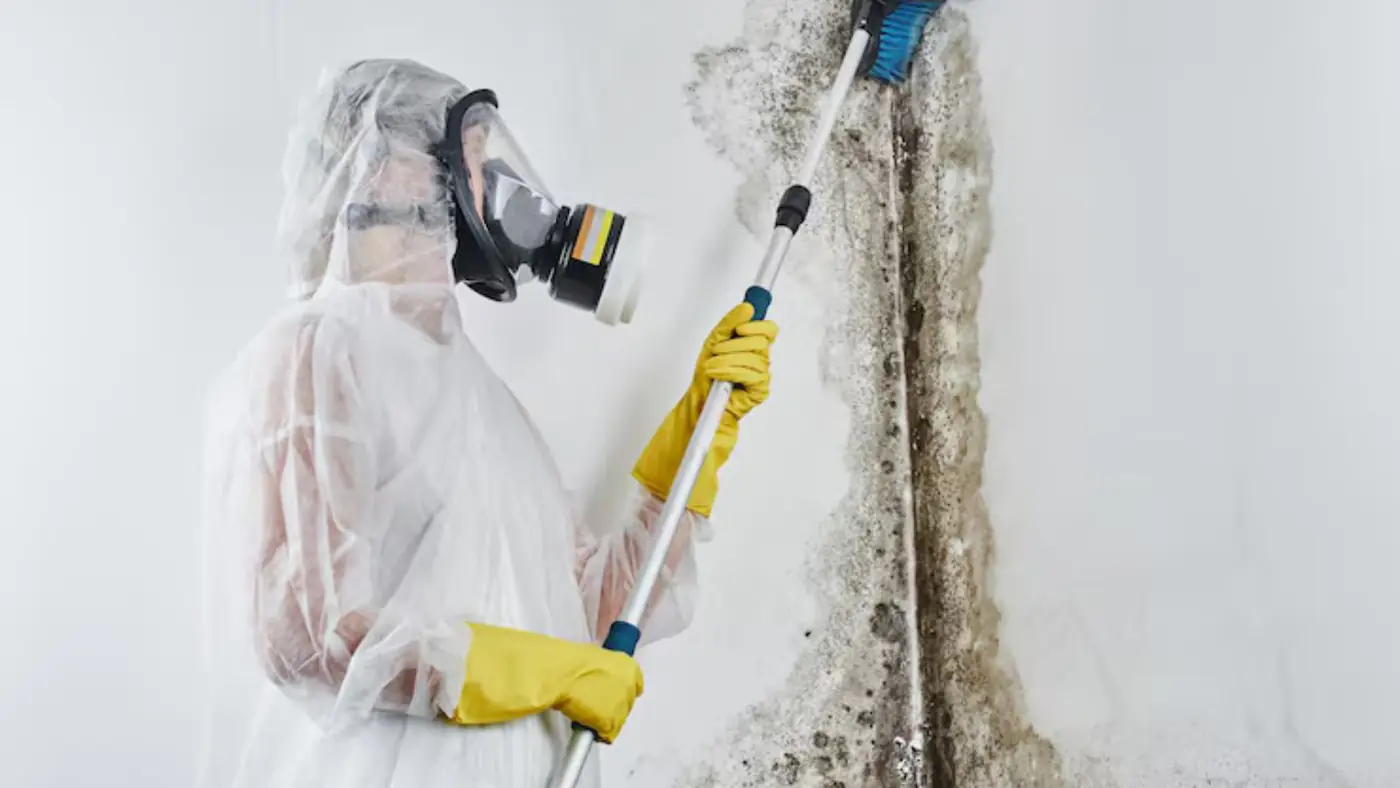
What black mold removal services do
A mold removal service finds the affected area, seals it off, removes materials that cannot be cleaned, cleans what can be saved and dries the structure. The goal is to take the growth out of the home and not to spread it while doing so. The work is usually called remediation, and it follows ANSI/IICRC S520 practice.
The word black on its own does not decide anything. Color is not a reliable way to identify a type of mold, so a good company scopes the job by how much is affected and what it grew on, not by shade.
Stage by stage: what the crew does
Inspection and moisture mapping
A technician uses a moisture meter and thermal imaging camera to trace the affected area and the water source behind it.
Containment
Plastic barriers seal the work zone so dust and spores stay in one place while the crew works.
Negative air
HEPA air scrubbers pull air out of the contained area, which keeps the room at lower pressure than the rest of the house.
Removing porous materials
Affected drywall, insulation, carpet and pad are cut out, bagged and carried away through a controlled path.
Cleaning non-porous surfaces
Framing, metal and tile are HEPA vacuumed and wiped down so no residue remains.
Drying and verifying
Air movers and dehumidifiers dry the structure until readings match a dry reference point.
Clearance is the last step. Many owners ask an independent tester to confirm the area after cleanup. That tester is separate from the remediation company, and questions about what a sample means belong to them.
What you will notice at the house
Expect plastic sheeting over doorways, a zipper door at the entry to the work area and the steady hum of air scrubbers. Crew members wear respirators and disposable suits. Bags of removed material leave through a set path so they do not cross clean rooms.
You may be asked to stay out of the contained area and to keep the air scrubbers running until the crew says otherwise. If a unit stops or a barrier tears, call dispatch. Nobody should be opening the containment to peek.
What the service does not include
- Fixing the leak itself. A plumber or roofer handles that, and the source has to be stopped before removal makes sense.
- The rebuild, unless it is written into the scope. Drywall, paint and flooring are often a separate phase of water damage repair.
- Health advice or a diagnosis. Those questions belong to a physician.
- A promise that growth will never return. Mold needs moisture, and a dry building is the real protection.
- Independent testing, which is best done by someone who is not selling the cleanup.
Some jobs also involve removing contaminated insulation in an attic or a crawl space, or lifting flooring where a slow leak soaked the subfloor. The stages stay the same, only the access and the amount of material change. A crew that explains why each piece is coming out is easier to trust than one that simply says everything goes.
Questions to ask a company before work starts
- Do your crews work to ANSI/IICRC S520?
- Will you provide a written scope listing rooms, materials and methods?
- How will you contain the area, and will you run negative air with HEPA filtration?
- Which materials will you remove, and who handles the rebuild?
- Who is responsible for clearance testing, and will it be independent?
- What is your California contractor license number, and may I verify it?
Want the scope explained before anyone starts?
Dispatch is open 24/7. A crew can inspect the area and describe what the work would involve.
Call (909) 505-3870Reading the written scope
A useful scope names each room, the materials to be removed, the containment method, the number of air scrubbers and the drying plan. It should say who does the rebuild and who arranges clearance. Vague wording like general cleanup of affected areas is a reason to ask more questions.
Compare two scopes line by line and not by the total at the bottom. A lower number that leaves out drying or containment is not the same job.
What drives the scope and the price
No honest company quotes a figure without seeing the space. These are the factors that move the scope, and your inspector should walk you through each one.
| Factor | Why it matters |
|---|---|
| Affected area | A closet corner and a full room of wall are different jobs |
| Materials involved | Porous materials like drywall and insulation must come out, hard surfaces can be cleaned |
| Water source and cause | Active moisture must be fixed and dried first, and a sewage or floodwater loss is handled differently |
| Containment needs | Larger or more connected areas call for more barriers and more air scrubbers |
| Drying time | Hardwood, plaster and thick insulation can need longer than the usual three to five days |
| Rebuild | Replacing removed drywall, paint and trim is its own line of work |
If the mold came from a covered water loss, ask your insurer what it will reimburse. Mold from a covered cause may be covered, so check your policy and keep every invoice. A related water damage cleanup job often comes first.
Water Damage Notes for Loma Linda
The Contractors State License Board says work totaling $1,000 or more in labor and materials needs a California contractor license. Work under $1,000 still needs a license if it needs workers or permits.
Ask any company in Loma Linda for its license number and look it up yourself on the CSLB site. Do it before you sign, and write the number on your copy of the scope.
Our crews also serve Grand Terrace homes and properties around Redlands with the same containment and drying process.
Mold Removal Service Questions in Loma Linda
Is black mold different from other mold?
You cannot tell from color. Dark growth and light growth are scoped the same way: find the moisture, contain the area, remove what cannot be cleaned and dry the structure. For identification, ask an independent tester.
How long does a removal job take?
A small contained area may take a few days. Larger areas, deep drying or a rebuild take longer. A written scope should include a rough timeline.
Can I stay in the house during removal?
That depends on the size and location of the work. Ask your crew about containment and where you can safely stay, and ask a physician about any health concern.
Will the company test the air afterward?
Often the testing is done by someone independent of the remediation company. Ask who will do it before you sign.
Who checks a contractor license in Loma Linda?
You can. The CSLB site lets you search by license number. It is a quick step that protects you if the work is large.