
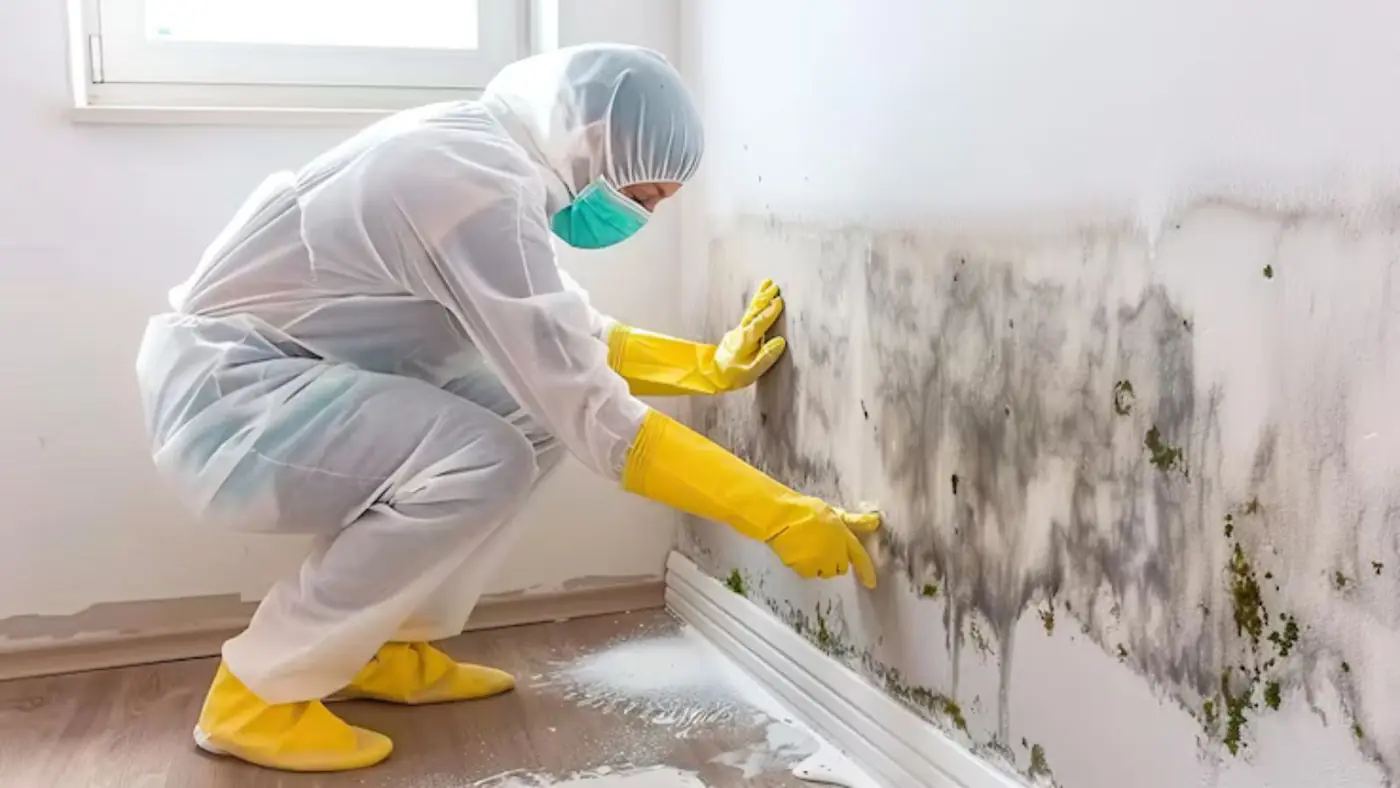
Mold remediation in Loma Linda is the controlled removal of mold growth and the materials it has damaged, done in a way that keeps spores from spreading to the rest of your home. It usually starts with a leak, a slow drip or a wet cavity that nobody saw. Our 24/7 dispatch line takes mold calls, and a call can be as simple as asking someone to look.
Homes here are often rentals, and callers frequently mention a toilet, a sink line, an AC condensate drain or a roof leak as the start of it. This page explains what happens, in what order, and what to ask any company before you hire.
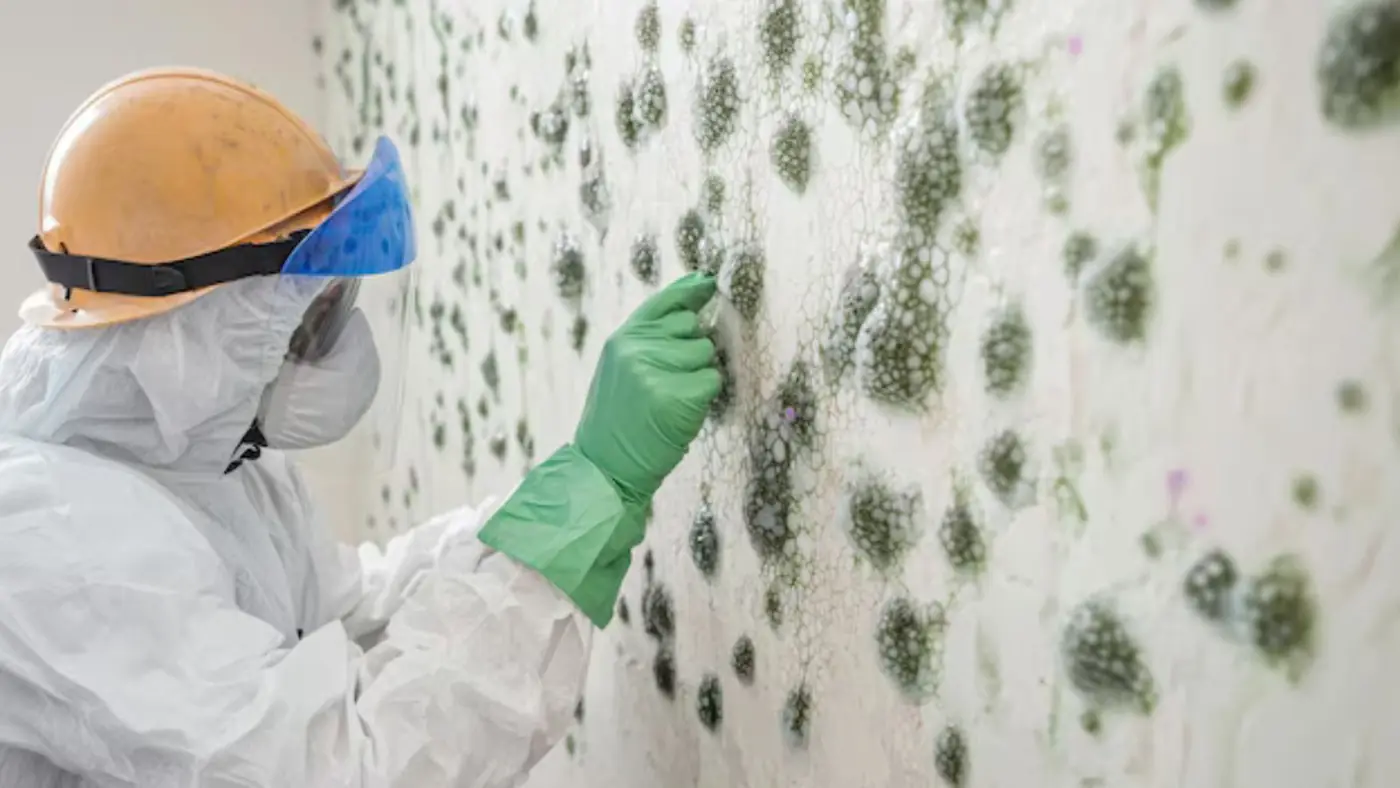
A Musty Smell, Spots in a Closet Corner or a Stain on the Bathroom Ceiling
Any of these can mean moisture has been sitting somewhere it should not. Dark spots on drywall, a fuzzy patch behind a pulled shoe rack or a ceiling stain that keeps coming back are the usual signs. Finding the cause and removing the damaged material is the job of mold remediation, and that is what our crews do.
How a Remediation Job Works
Good mold work follows a sequence, and the sequence is what keeps spores from moving through the house. Crews work to ANSI/IICRC S520 practice, the published standard for mold remediation, and you should ask any company whether its crews do the same.
- An inspection finds the visible growth, the moisture source and how far damp material runs behind it.
- Containment barriers of plastic sheeting and zipper doors seal off the work area.
- Negative air machines pull air out of the sealed zone through filters so spores are not pushed into other rooms.
- HEPA air scrubbers clean the air during and after the work.
- Affected drywall, carpet or trim is removed, bagged and carried out, and surfaces are HEPA vacuumed and wiped.
- Moisture readings confirm the framing is dry before anything is rebuilt.
Mold Removal and Black Mold Cleanup
People often ask for black mold cleanup by name. Mold comes in many colors, and you cannot tell the type by sight. Color alone does not change how the job is done, so we treat every visible growth the same way, with containment, removal and cleaning of the affected area.
Porous materials such as drywall, ceiling tile, insulation and carpet pad are normally cut out and discarded when mold has grown into them. Solid materials such as framing and concrete can often be cleaned with HEPA vacuuming and damp wiping, and some are sanded or wire brushed. Painting over a patch does not remove it. Bleach on a porous surface does not reach roots inside it.
If you plan to clean a very small spot yourself, keep the area closed off, avoid dry brushing and wear a fitted respirator and gloves. For anything larger than a small patch, or any growth tied to sewage or a long-wet structure, call a crew. Questions about how mold affects a person belong with a physician.
Mold After Water Damage
Mold needs moisture. After a burst pipe, a washing machine overflow or a roof leak, wet drywall and framing can start growing mold if they are not dried quickly, and EPA guidance puts that window at about 24 to 48 hours. That is why the leak has to be fixed before anything else. Removing mold from a wall that is still damp only sets up the next patch.
If you have recent water damage, water mitigation comes first. That means stopping the source, extracting water and drying the structure with air movers and LGR dehumidifiers, with moisture meters confirming the result. If damage is already visible, remediation and drying happen together, so the wet material that fed the mold is not left behind.
Once the mold is out and the framing is dry, rebuilding comes next, and that is handled under water damage repair. Ask the city building department whether your repair needs a permit.
Where Mold Hides After a Leak
- The closet next to an air handler, where an AC condensate line has dripped onto the wall base.
- Under bathroom and kitchen sinks, behind the cabinet back and along the supply line.
- Behind a carpet that was pulled back, on the tack strip, the pad and the bottom of the wall.
- The soffit and attic, below a roof leak or a poorly vented bath fan.
- Bathroom ceilings below a shower, a tub or a toilet on the floor above.
| Situation | What to do first | Who to call |
|---|---|---|
| Musty smell, no visible source | Look under sinks and near AC lines, then note where the smell is strongest | Remediation crew for an inspection |
| Spots in a closet corner after a leak | Fix the leak and keep the closet closed off | Remediation crew, plumber or HVAC tech for the source |
| Ceiling stain below a bathroom | Stop use of the fixture above, photograph the stain | Plumber, then a crew to open and check the ceiling |
| Mold after a recent flood or burst pipe | Dry the structure promptly, do not rebuild yet | Water mitigation crew, with remediation if growth is visible |
| Sale or loan requires mold clearance | Ask what the lender or buyer actually requires in writing | Remediation crew, then an independent tester |
| Symptoms you think relate to your home | Move the question to a doctor | A physician, and an independent tester if you want air or surface sampling |
Not sure what you are looking at
Call dispatch and describe the smell, the stain or the leak. We will explain what an inspection involves and what to do while you wait.
Call (909) 505-3870Mold Testing, Inspection and Clearance
An inspection is a visual and moisture check of the home, done with moisture meters and a thermal imaging camera, to find the growth and its source. It tells us where the work goes and how big it is. It is different from laboratory testing.
Testing is air or surface sampling sent to a lab. Independent clearance testing is done by a third party, not the company that did the cleanup, after remediation is complete. That separation matters, since the person judging the result has no stake in the work. A passing result means the tester found the area acceptable at that time, and it is a record you can show a buyer or lender.
Hire an independent tester and ask what standard and sampling method they use. Questions about whether mold affects your body belong to a physician, not to a restoration company or a lab report.
What Remediation Does and Does Not Do
Remediation removes the growth you can see, the materials it damaged and the spores it spread, and leaves the area clean and ready to rebuild. It cannot remove every spore from a home, since spores are a normal part of outdoor and indoor air. It does not fix a leaking pipe, a roof or a missing vapor barrier. Those need a plumber, roofer or HVAC tech.
We will not promise growth will never return, because that depends on moisture. If the cause is fixed and the structure stays dry, the odds are good. If a condensate line backs up again, mold can grow again. Humidity control and quick leak repair keep the risk low.
What Affects the Cost of Mold Work
Scope and price are explained before work begins, after an inspection or assessment of the home, and we do not quote from a phone description alone. These are the main factors:
- How large an area is affected and how many rooms it spans.
- The materials involved, since drywall, wood framing and attic insulation need different handling.
- How much containment and negative air the job needs.
- Whether water must also be dried out or the source repaired first.
- Whether independent clearance testing is wanted and how many rebuild steps follow.
Mold from a covered cause, such as a sudden pipe break, may be covered by your homeowners policy, so check your policy and ask your insurer before you start. Gradual leaks are often excluded. Photograph the growth and the source and save receipts. For a real number, call dispatch.
Renters, Licensing and Local Details
Only 37.9 percent of Loma Linda homes are owner occupied. If you rent, report mold and the leak to your landlord in writing, photograph it and keep a copy. The repair and the claim usually run through the landlord and the landlord's insurer.
Ask whether your state licenses mold work, and ask any company for its contractor license number. The Contractors State License Board says work totaling $1,000 or more in labor and materials needs a California contractor license, and you can check any number on the CSLB site yourself. We serve ZIP codes 92354 and 92350, along with neighbors in water damage in Redlands and Colton homes.
Mold Remediation Questions
I smell something musty but cannot see mold. What should I do?
A musty smell usually means something is damp. Check under sinks, around the water heater and near AC lines, and look for stains. If you find a source or the smell stays, call for an inspection and we will look with a moisture meter and thermal camera.
My home sale requires mold clearance. How does that work?
Ask the lender or buyer exactly what they require in writing. Typically the cleanup is done by a remediation company, then an independent tester samples the area. We cannot say what any lender will accept, since each sets its own rules.
Who does the testing?
Testing belongs to an independent tester, not to us. Hiring a separate party keeps the result independent of the cleanup. They will explain their sampling method.
Can I just bleach a spot in the closet?
Bleach on porous drywall does not reach what is growing inside it, and scrubbing can spread spores. If the spot is small and on a hard surface, careful cleaning may work. If it keeps returning, find the moisture.
Will my insurance pay for mold?
Mold from a covered cause may be covered, and mold from neglect or a slow leak often is not. Read your policy and ask your insurer, and keep photographs and receipts.
Is mold in my home making me ill?
That is a question for a physician. We handle the building side, which is finding the moisture and removing growth. Share what you find with your doctor if they ask.
How long does remediation take?
Small jobs can take a day or two, while larger ones with drying and rebuild take longer. The inspection determines the schedule. Containment and drying readings drive the timeline more than the calendar.