
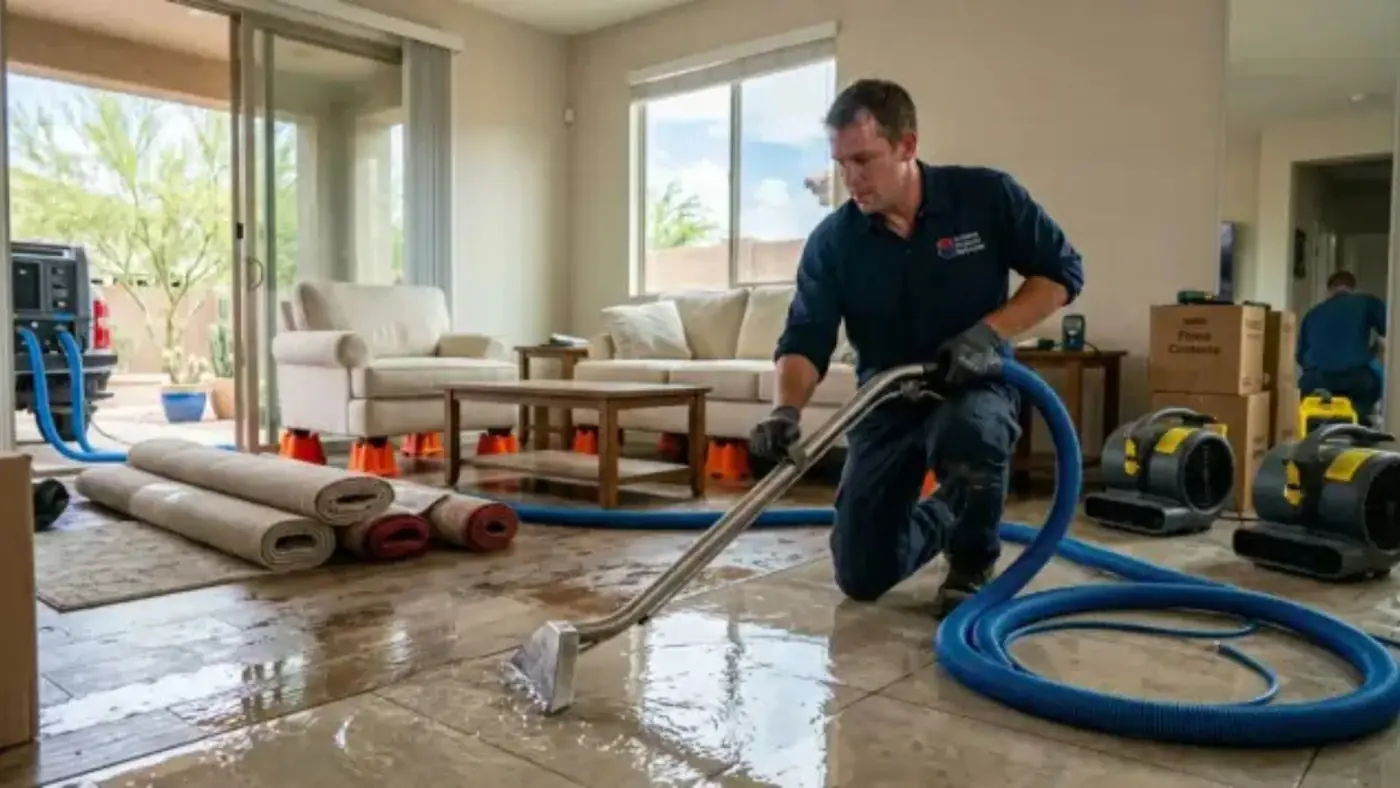
Emergency water removal in Loma Linda means getting standing water out of your home with pumps and extraction machines before it soaks into floors, walls and belongings. Our 24/7 dispatch handles calls at night and on weekends. Right now, shut off the main water valve if a pipe is the source, keep everyone out of the water, and move anything valuable up onto dry furniture.
If the water is touching outlets or the electrical panel, stay out and call the utility or 911 first. Turn off power to the wet area only if the panel is dry and you can reach it from dry ground.
Electrical and gas hazards come first
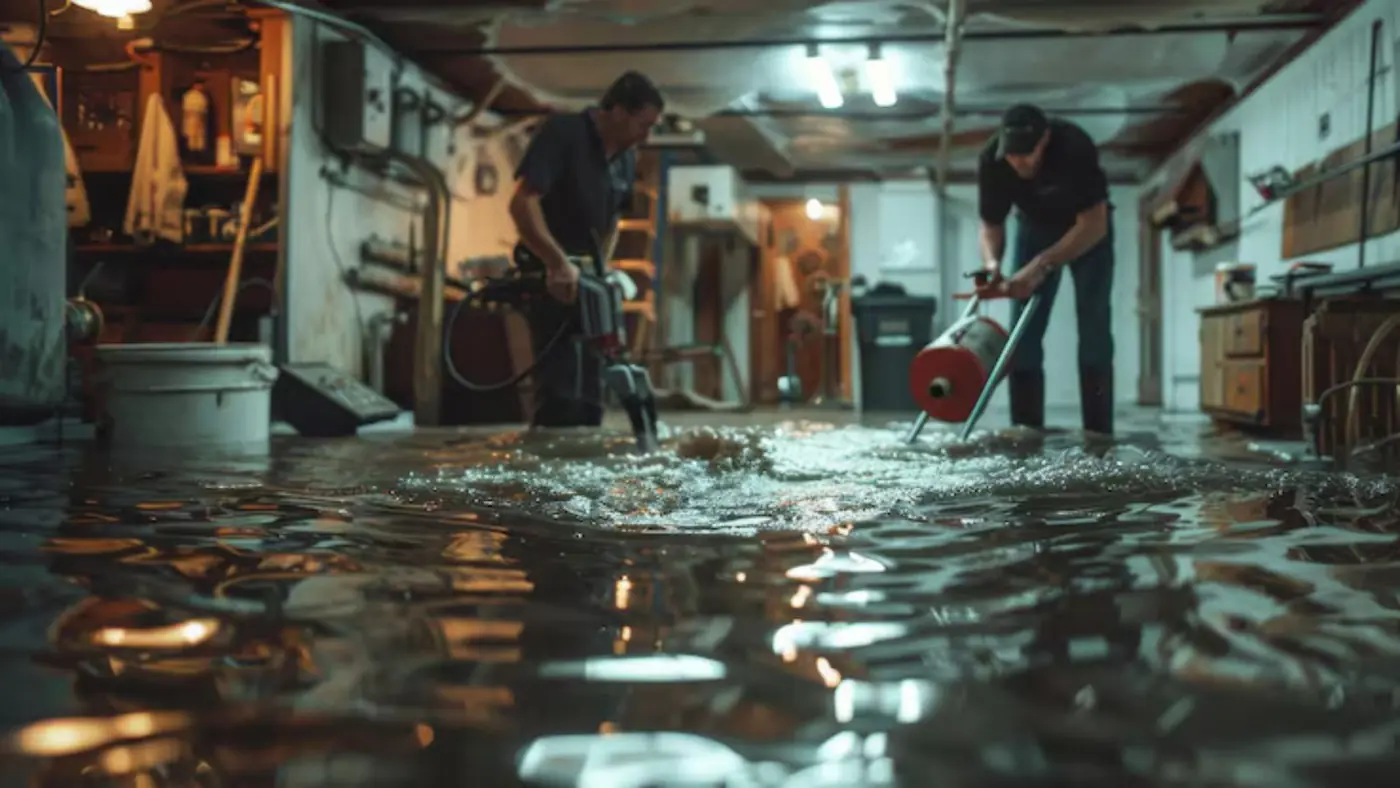
Water and electricity do not mix, and ankle-deep water can hide a live cord or a submerged outlet. Do not wade into a flooded garage, laundry room or basement stairwell with power still on.
If you smell gas, hear hissing or see sparks, leave the house and call 911 from outside. Do not call us first. Sewage in the water also means stay out, since it needs protective gear and careful handling.
Burst Pipe Water Damage
A burst pipe can release hundreds of gallons in a short time, so the first minutes count. Find the main shutoff valve, usually where the water line enters the house near the front hose bib or in the garage, and turn it clockwise until it stops. The city meter sits on the street side, and the valve at your house is the one you control.
Then open a faucet at the lowest point to drain the line. If the leak is under a sink, close the small oval or round supply valve below the fixture. For a washing machine hose, close both wall valves behind the machine. For a water heater leak, shut the cold water inlet on top of the tank and turn off its power or gas control.
Photograph the failed part before you move it. Once the flow is stopped, the extraction crew can take over, and you can read more about the drying that follows.
Water Standing in the House Right Now
Whole-house flooding is the hardest version of this call. Water may cover every room on a floor, soak the pad under every carpet and reach the lower inch or two of drywall all around. In that case extraction comes first and everything else waits.
A single supply line can leave an inch across a kitchen. A heavy storm or a sewer backup can leave far more. We sort out the source and the water category before choosing equipment, and a larger or contaminated loss moves into flood damage restoration work.
How Water Gets Pulled Out
Submersible pumps
For deep standing water, a submersible pump sits in the water and moves it out through a hose. It is the right tool for a flooded basement, garage or crawl space.
Truck-mounted extraction
A truck-mounted unit uses a long hose and strong vacuum to pull water out of carpet and flooring. It handles large areas fast.
Portable extraction units
Smaller wheeled units go where a truck hose cannot reach, such as upstairs rooms and tight hallways.
Wet vacuums and hand tools
Wet vacuums finish edges, stairs and corners. Squeegees and towels handle the last film on hard floors.
Extraction often includes lifting the carpet and removing the pad. Pad acts like a sponge and rarely dries well in place, so it is usually cut out and discarded while the carpet is lifted and propped for separate drying. If water went beneath hardwood or laminate, we check with moisture meters before deciding what to pull.
Water in a Crawl Space
Crawl space water is easy to miss. A pipe can leak below the floor for days while the rooms above look fine, and a damp floor, a musty smell or a soft spot can be the only sign. Pumping is only part of it, because insulation, vapor barrier and framing stay wet long after the pool is gone.
Crawl spaces are tight and may hold wiring, so the crew checks for electrical hazards before entering. Call us if you see water through the access panel or hear running water you cannot trace.
| What you see | Do this first | Then call for |
|---|---|---|
| Pipe spraying or running | Turn off the main water valve | Pump-out and pad removal |
| Water near outlets or the panel | Stay out, call the utility or 911 | Extraction once power is safe |
| Toilet or drain backup with waste | Keep everyone out, no vacuuming | Contaminated water extraction and cleanup |
| Wet floor with no visible source | Check under sinks and behind appliances | Moisture mapping and extraction |
| Pooled water under the house | Do not enter the crawl space | Pump-out and a hazard check |
Standing water will not wait
Call dispatch any hour, including nights and weekends, and describe what you see. Same-day requests are taken as crews are available.
Call (909) 505-3870Getting to You Across Loma Linda
Water in a hospital-area apartment off Barton Road and water in a house near Mountain View Avenue need the same first steps. Crews work through Mountain View Avenue, Barton Road, Redlands Boulevard and the I-10 corridor, and traffic on any of them can slow a truck. We cannot promise a drive time, so use the minutes while you wait to stop the source and lift valuables.
Loma Linda draws its water from groundwater in the Bunker Hill Basin, delivered by the city Water Production Division. That means the city line ends at the meter and the house line starts after it, so know where both are before an emergency. Our service ZIP codes are 92354 and 92350, and neighbors in San Bernardino get the same dispatch line.
After the Water Is Out
Removing standing water is the start, not the end. Walls, subfloors and framing keep moisture, and drying them usually takes three to five days, longer for hardwood, plaster or thick insulation. Debris, damaged materials and contents are handled under water damage cleanup, and mold becomes a risk if drying is delayed.
What Affects the Cost of Water Removal
We explain scope and price before work begins, after an inspection of the affected rooms. The factors that move the number are these:
- The water category, since sewage or storm water adds protective gear and disposal.
- The depth of the water and the area it covers.
- Floor type and what sits under it, such as carpet, pad, hardwood or concrete.
- How many hours of pumping and extraction are needed.
- Whether drying equipment and rebuild work follow.
Sudden and accidental water damage is often covered by homeowners insurance, gradual leaks often are not, and flood usually needs a separate flood policy. Check your policy and keep every receipt. Call dispatch for a real number on your loss.
Emergency Water Removal Questions
Do you handle water removal emergencies at night or on weekends in Loma Linda?
Yes, dispatch is open around the clock, including holidays. Tell the dispatcher where the water is coming from and whether anything electrical is wet. We do not promise a set arrival time.
Who shuts off water after a major main break in the street?
If the break is in the city main, call the City of Loma Linda Public Works and ask for the water shutoff on that line. If it is on your side of the meter, close your own main valve. A restoration crew cannot shut off a city main.
Do I need to remove the carpet right away?
Usually the pad has to come out soon, while the carpet itself can often be lifted and dried. Waiting lets the pad stay wet and can lead to odor and mold growth.
Can you pump out a flooded crawl space?
Yes, once we have checked it for electrical and structural hazards. We also check wet insulation and framing, since those stay damp after the water is out.
How soon after pumping will everything be dry?
Pumping removes the standing water only. Drying the structure usually takes three to five days, and longer for hardwood, plaster or thick insulation. A moisture meter tells us when it is done.
Is the water from my washing machine hose dangerous?
It can be Category 2 water, which means it carries some contamination. Avoid touching it with bare hands, and tell the dispatcher so the crew brings the right gear.