
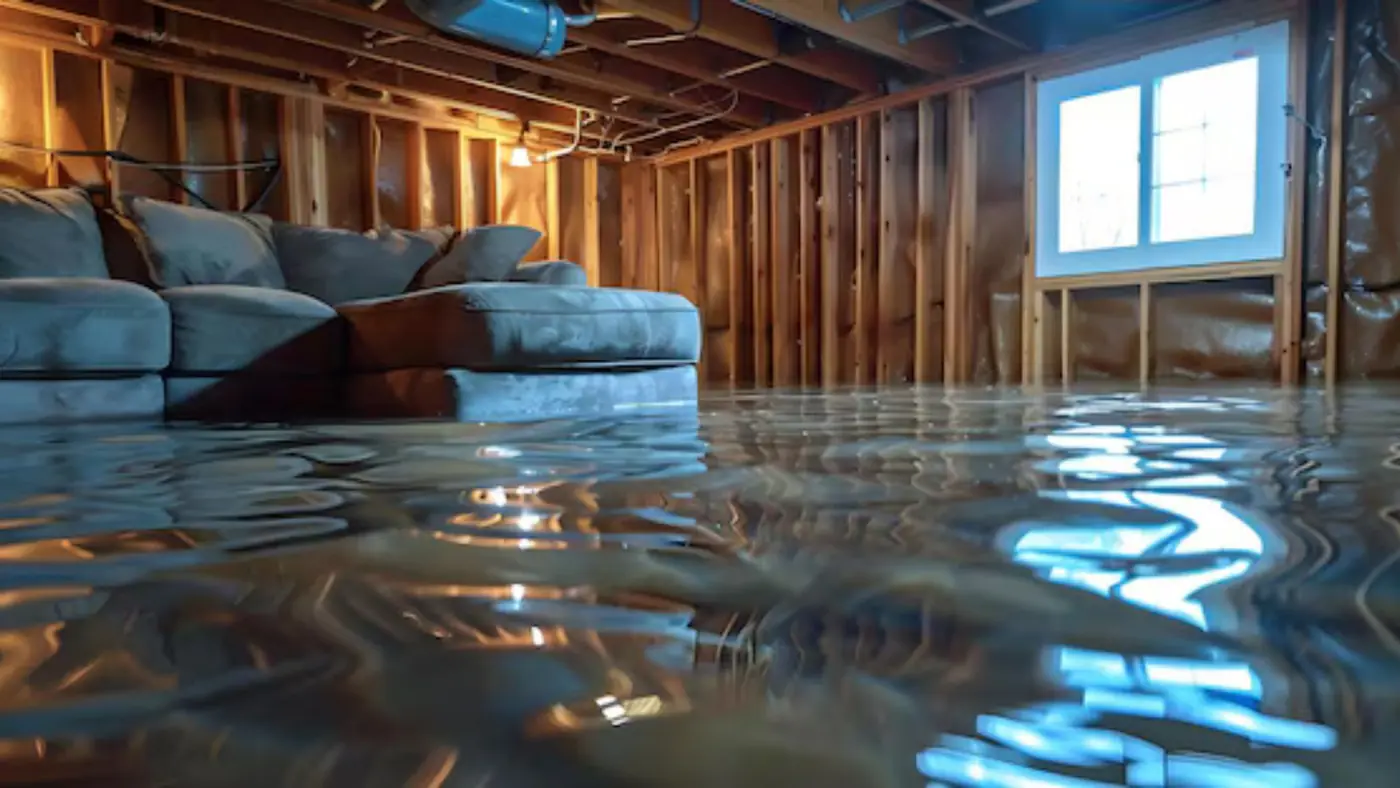
Water that sits in a house keeps working, and Loma Linda Water Damage Pros runs 24/7 dispatch for that reason. While you wait, stop the source if you can, shut off the main water valve, turn off power to wet areas only if the panel is dry and reachable, lift valuables off the floor, and keep people and pets out of contaminated water.
Water mitigation is the work of stopping water damage from spreading in Loma Linda, CA: shutting off the source, extracting standing water, setting drying equipment and mapping moisture so nothing stays wet. It is separate from repair, which rebuilds afterward.
Wet carpet, damp walls and a musty smell: that is when mitigation matters
If carpet squishes underfoot, baseboards are darkening, paint is bubbling or the air smells like a damp cellar, water is still sitting in materials you cannot see. It travels into wall cavities and under flooring long after the puddle is mopped up.
That is the job of water mitigation. Crews find where the moisture went with meters and cameras, remove what is standing, and run drying equipment until readings reach a dry standard.
Water is spreading right now: your first steps
- Find the source and stop it. A supply line, appliance hose or toilet usually has its own small shutoff valve.
- Close the main water valve if the source is not obvious or will not stop.
- Move rugs, books, electronics and small furniture to a dry room, and photograph the damage first.
- Call dispatch and describe what is wet, how far it has spread and what the source was.
When to stay out
If water has reached the electrical panel, outlets or a gas appliance, or if it is sewage, do not enter. Cut power only if the panel is dry and you can reach it without touching water. Call the utility or 911 about electrical or gas risk before you call us.
Know your shutoff before the day you need it. The City of Loma Linda Water Production Division supplies water from groundwater in the Bunker Hill Basin through six city wells. The meter marks the city side of your service line, and the main shutoff is on the house side. Find both now, and turn the house valve once so you know it works.
How the first 24 to 72 hours unfold
Source and safety
The crew confirms the water is stopped, checks for electrical hazards and decides what category the water falls into.
Extraction
Extraction units pull standing water from floors, and wet carpet pad is lifted when it cannot be dried in place.
Drying setup
Air movers, LGR dehumidifiers and wall panels are placed according to the room, not by a fixed formula.
Moisture mapping
Meters and thermal imaging cameras mark wet and dry areas, and those readings become the baseline for daily checks.
Structural Drying
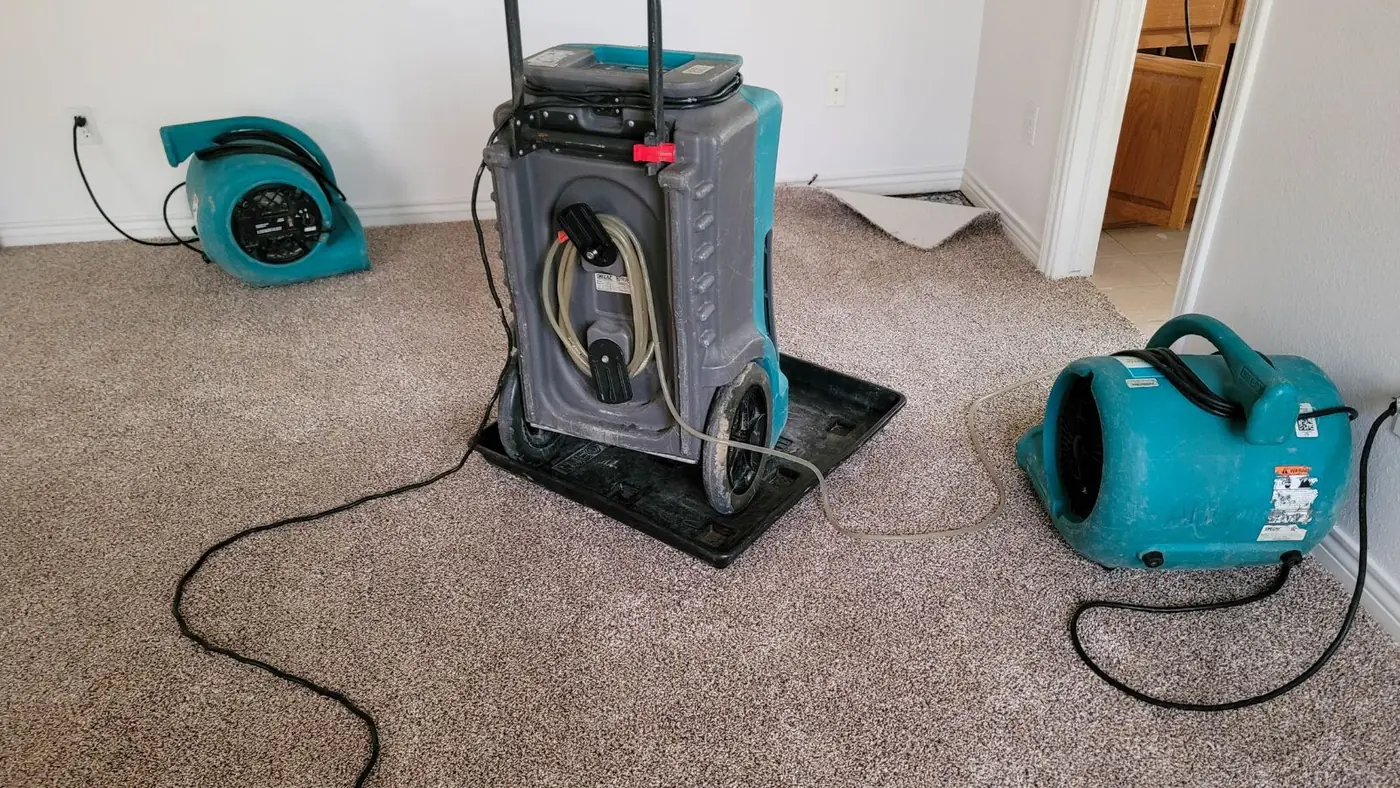
Structural drying is the part most people notice as noise in the living room, and it is a measured process. Air movers push dry air across wet surfaces. LGR dehumidifiers pull moisture out of the air so it does not simply drift to the next room. In wall cavities and under cabinets, injectidry panels push warm, dry air into the space without tearing everything open.
Moisture meters and thermal imaging cameras guide where equipment goes. Crews take baseline readings, record them, and return daily to check progress, then move or pull equipment as each area reaches its drying goal. That goal is the reading of comparable dry material in your own home.
The work follows ANSI/IICRC S500, the published standard for water damage restoration, and you can ask any company whether its crews work to it. Daily readings are also how you and your insurer can see the structure is dry before any rebuild starts.
Water damage still in progress?
Dispatch answers at night and on weekends. Call 24/7 and describe what is wet.
Call (909) 505-3870Mitigation, cleanup and repair: which comes when
| Stage | What happens | Timing |
|---|---|---|
| Mitigation | Shutoff, extraction, drying setup and moisture mapping | The first 24 to 72 hours |
| Drying and monitoring | Equipment runs and readings are logged daily | Usually three to five days, longer for hardwood, plaster or thick insulation |
| Cleanup | Surfaces cleaned, treated and contaminated materials removed | During and after drying, depending on water category |
| Repair | Drywall, flooring, paint and cabinets rebuilt | After readings show the structure is dry |
Loma Linda details that help a crew find you
Loma Linda incorporated in 1970, and its name is Spanish for pretty hill. For a crew, the useful part is the map. Give dispatch your street, the nearest cross street and a landmark such as Loma Linda University Medical Center, Mountain View Avenue or Barton Road, since Interstate 10 runs adjacent to the city and the city meets other towns at several edges.
Homes in San Bernardino and in nearby Redlands reach the same dispatch line. For deep standing water, see emergency water removal. Storm or sewage events fall under flood damage restoration, and later stages are covered by water damage cleanup and water damage repair.
What affects the cost of water mitigation
- Water category, since contaminated water needs protective gear and more removal.
- Affected area and the number of rooms and floors the water reached.
- Materials, because hardwood, plaster and thick insulation dry slowly.
- Equipment count and drying days, which come from the moisture readings.
- How long the water stood before the first call.
Insurance can change who pays what, so check your policy and ask your insurer. Ask for your real number by calling dispatch, where the scope is explained before work begins. The crews we dispatch are licensed and insured, and our office sits on Mountain View Avenue in Loma Linda.
Water mitigation questions
Do you handle water mitigation emergencies at night or on weekends in Loma Linda?
Yes. Dispatch is open 24/7, including nights, weekends and holidays. Call, describe the source and what is wet, and dispatch tells you what to do right away while a crew is sent.
My carpet feels damp but I see no standing water. Do I need mitigation?
Often, yes. Damp carpet means the pad, tack strip and subfloor may be wet too. A meter reading tells you whether it will dry on its own or needs equipment.
Why does my house smell musty days after a leak?
A musty smell usually means moisture is still trapped in a wall, floor or ceiling. Mold needs moisture, and drying wet materials within about 24 to 48 hours helps prevent growth, so call sooner rather than later.
Can I rent air movers and dehumidifiers and dry the house myself?
Air movers push dry air over wet surfaces and LGR dehumidifiers remove the moisture from the air. Drying usually takes three to five days, longer for hardwood, plaster or thick insulation.
Drying equipment is placed and monitored by trained crews and is not a do-it-yourself rental job in our service.
What is the difference between mitigation and repair?
Mitigation stops the damage and dries the structure. Repair rebuilds what could not be saved. Repair starts only after drying readings are in range.
Will insurance cover water mitigation?
Sudden and accidental water damage is often covered, and flood is usually excluded from standard homeowners policies. Keep receipts for emergency protection costs, and check your policy.