
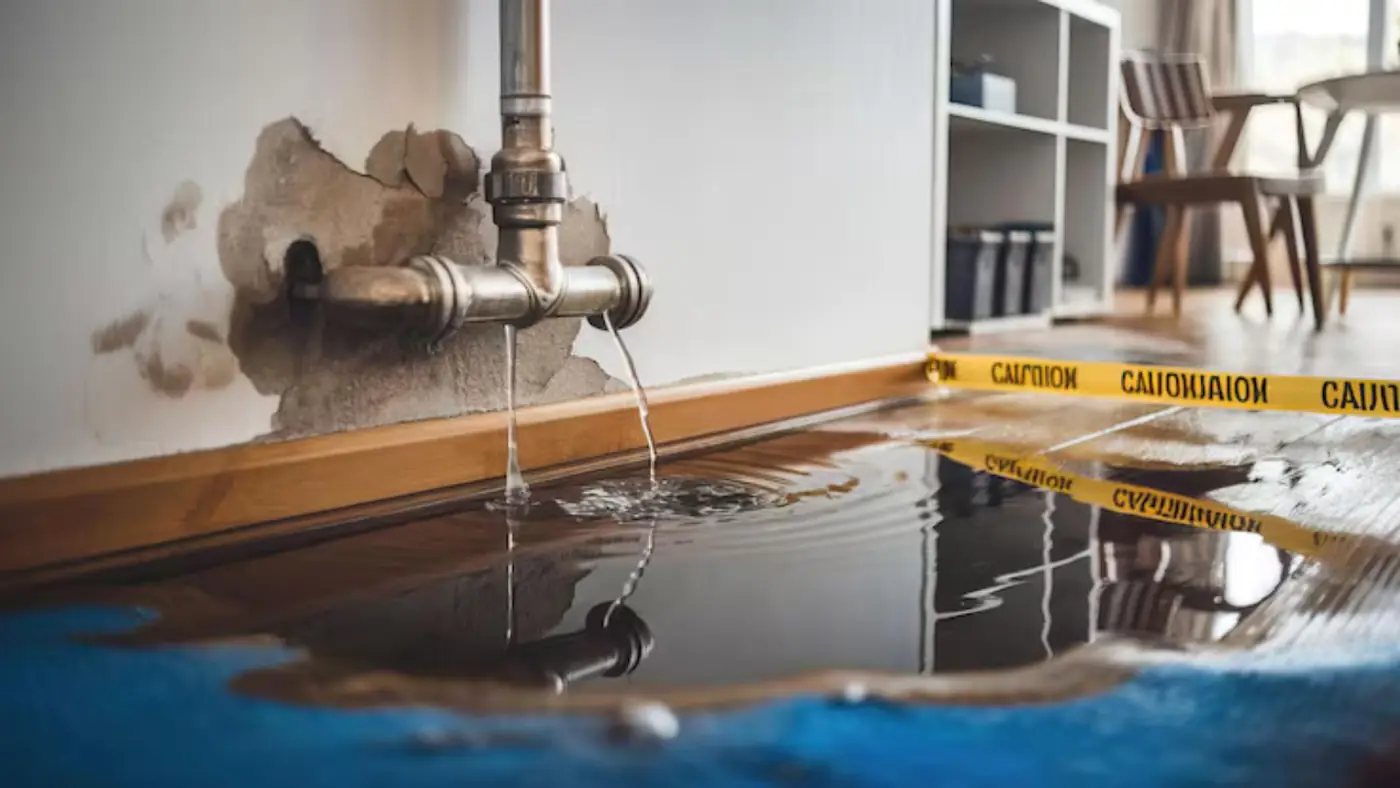
Stop the water first, everything else second
If a pipe has burst, close the main water shutoff valve right now. Turn it clockwise until it stops. Most homes have it at the front wall near the hose bib, in a garage, or in a utility closet. A gate valve needs several full turns, a lever valve needs a quarter turn.
Then open one faucet at the lowest level of the house to drain what is left in the lines, and flush a toilet once. Less pressure in the pipes means less water coming out of the break while you sort out the rest.
Water and electricity
If water is reaching outlets, a power strip, or the electrical panel, do not wade in to flip breakers. Cut power only if the panel is dry and you can reach it without stepping through water. If you cannot, call the utility or 911 about the electrical risk before you call anyone else.
Where is the main shutoff and who owns what
Your line has two ends. The meter box near the street belongs to the water supplier, and the shutoff valve at the house belongs to you. Walk out and find both on a dry day, because a panicked search at midnight is how a small break becomes a flooded hallway.
Do not try to close the meter valve yourself unless your supplier tells you to. That valve is theirs, and the special key is theirs too. If the break is on the street side of the meter, the supplier handles the repair. If it is on your side, the pipe and the damage are yours to deal with.
What to do in the next 15 minutes
- Close the main and drain the lines at a low faucet.
- Keep people and pets out of any water that has touched outlets or appliances.
- Photograph and film the break, the water line on the walls, and every wet room before you move anything.
- Lift small valuables, rugs, laptops, paperwork, and shoes onto beds or counters.
- Slide furniture legs onto foil or plastic blocks so wet wood does not stain the floor.
- Pull up pooled water with a mop or wet vacuum only if the area is clear of electrical hazards.
Skip the heavy lifting. A soaked sofa or a full dresser is awkward and slippery, and the extraction crew has the tools to deal with it. Your job at this stage is to protect people, protect the small stuff, and record what you see.
Dispatch, the plumber, or the city: who gets the first call
Water that is already on the floor needs a restoration call, and it does not need to wait for the pipe repair. A plumber fixes the break. A restoration crew removes the water and dries the structure. Emergency water removal is the part that cannot wait, because standing water soaks into drywall, baseboards and subfloor by the hour.
In practice you make both calls, and the order matters less than making them quickly. Once the main is closed, the plumber can work on his schedule. The extraction does not have that luxury.
| Situation | First call | Why |
|---|---|---|
| Pipe broke inside the house, water on floors | Restoration dispatch, then plumber | Water is spreading into materials while you wait |
| Break is between the street and your shutoff | Your water supplier | The line and meter are on their side |
| Shutoff valve will not close | Plumber and the water supplier | You may need the meter shut at the street |
| Water near the panel or outlets | Utility or 911, then dispatch | Electrical risk comes before cleanup |
| Dirty or sewage-smelling water | Dispatch, and a plumber for the drain | Contaminated water changes the cleanup plan |
Water still on the floor?
Our 24/7 dispatch can send a crew to start extraction while you wait for the plumber.
Call (909) 505-3870What extraction actually does
A crew starts with the standing water. Truck-mounted or portable extraction units pull far more than a shop vacuum can, and the extractor wand on carpet and pad takes out water that a towel would never reach. Technicians then use moisture meters and thermal imaging cameras to follow the water into walls and under cabinets.
A clean supply line break is Category 1 water at first. Left standing it can slide toward Category 2 as it picks up dirt and bacteria from floors, which is one more reason to move fast. Our water mitigation work covers the drying phase that follows extraction.
Why drying has to start quickly
EPA guidance points to about 24 to 48 hours as the window for drying wet materials before mold growth becomes a concern. That window is short. Drywall wicks water upward, baseboards trap it behind the paint, and insulation holds it like a sponge.
Drying is not finished when the floor feels dry. Wall cavities, subfloor and the back of cabinets stay wet longer than the surface. Crews set air movers and LGR dehumidifiers, then take daily moisture readings to see when each material reaches its dry goal. ANSI/IICRC S500 is the published standard for this work, and you can ask any company whether its crews follow it.
What to keep, what to document, what to leave alone
- Keep the broken pipe section if the plumber removes it, since an insurer may want to see it.
- Keep receipts for emergency steps such as extraction, tarps, and hotel nights.
- Save the damaged items in a pile or photograph them before they go to the curb.
- Do not tear out walls or flooring on your own before the water is mapped.
- Do not run a household fan and call it dry.
Insurance is worth a call the same day. Sudden and accidental water damage is often covered, but gradual leaks often are not, so check your policy and ask your insurer. California Department of Insurance guidance says to stop the leak, dry promptly, and avoid permanent repairs until the adjuster has inspected.
Water Damage Notes for Loma Linda
The City of Loma Linda Water Production Division supplies the city's water from groundwater in the Bunker Hill Basin, through six city wells, 14 million gallons of storage and five pressure zones. That means the city side of your line and the home side are one continuous system, so learn where your own shutoff is and where the meter box sits before you ever need them.
If you are not sure whether a break is yours or the city's, close your own valve first. If water keeps flowing into the yard after that, the problem is upstream of you and the city water division is the right call. In both cases, your shutoff protects the inside of your house.
Nearby help if you are outside the city
Our crews work out of Loma Linda and cover the surrounding cities. Homes just west of us can see the same steps on our Colton water damage page, and Grand Terrace homeowners will find their area details on the Grand Terrace service page. Call dispatch from wherever you are and tell them the address.
Burst pipe questions, answered
Should I call the plumber or a water damage company first?
Close the main, then call both. The plumber stops the cause and the restoration crew removes the water. If the water is already on the floor, extraction is the more time-sensitive call.
How fast does a burst pipe cause lasting damage?
Drywall and baseboards start absorbing water right away. Over the first day or two the water travels into wall cavities and subfloor, and that is when drying gets harder and mold risk rises.
Can I just use fans and towels?
For a few cups on tile, yes. For anything that reached carpet, a wall or a cabinet, no. Household fans move air but do not pull moisture from a wall cavity, and they leave readings you cannot verify.
Is my burst pipe damage covered by insurance?
A sudden and accidental break is often covered, while a slow leak over weeks often is not. Read your policy and ask your insurer, and take photos before you clean up.
Who do I call in Loma Linda if the main line is leaking at the street?
A leak on the street side of the meter is a city water division matter. Inside the house, the pipe, the repair and the drying are your responsibility. If both seem involved, close your own shutoff and then call the city and dispatch.