
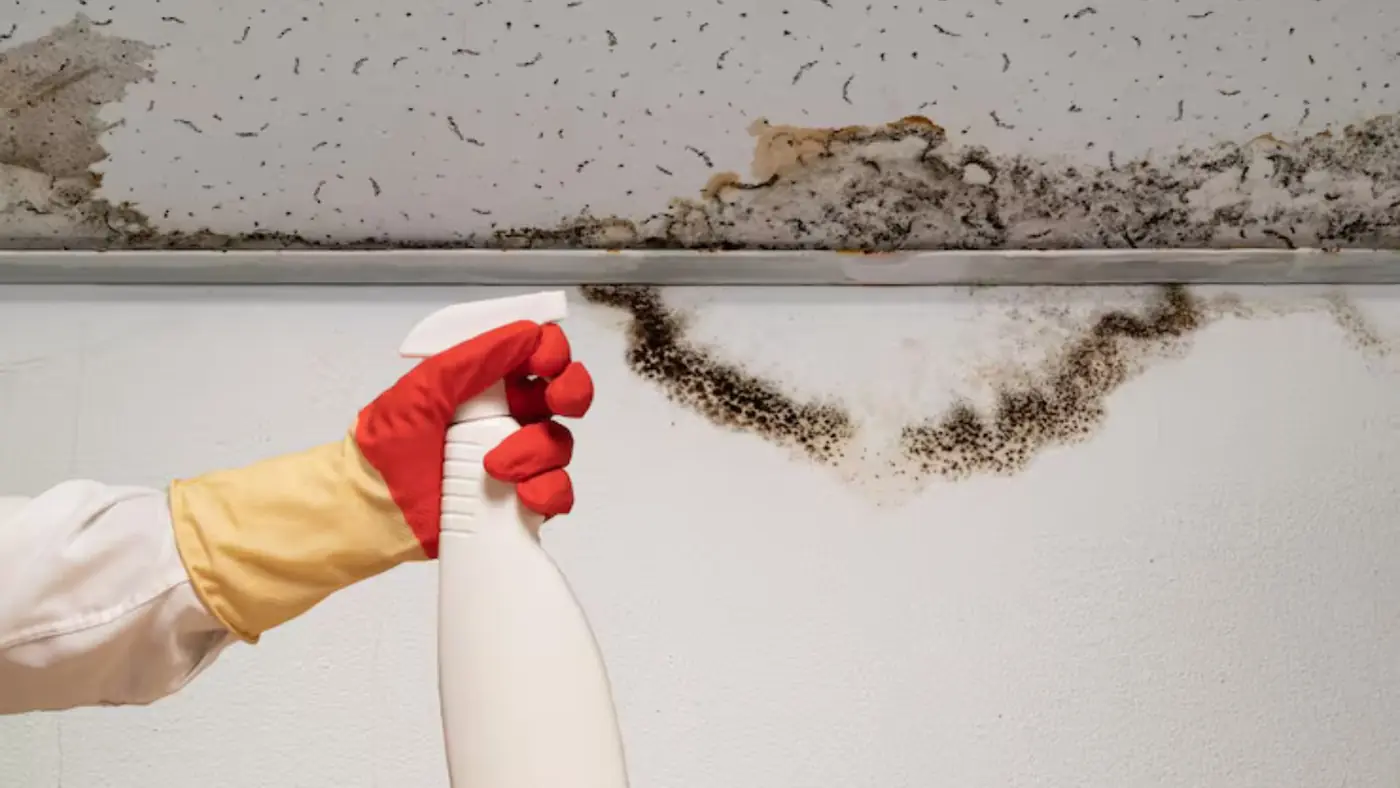
What early ceiling mold looks like
Early ceiling mold rarely looks dramatic. You may see small gray, green, brown or black dots, a cloudy patch that spreads a little each week, or a ring that darkens along a seam. Sometimes there is no visible growth at all, only a damp, earthy smell that comes and goes.
Mold needs moisture, so a spot overhead is a clue about water, not just a cleaning chore. Finding where the moisture comes from matters more than scrubbing the stain, because wiping the surface leaves the cause in place.
A quick checklist of early signs
- Pinpoint dots or fuzzy patches, often near corners, seams or around a vent.
- Yellow, tan or brown discoloration that has a darker edge, which usually points to water that has dried and returned more than once.
- A musty smell that strengthens when the room is closed or the fan runs.
- Paint that bubbles, flakes or feels slightly tacky.
- Drywall that sags, feels soft or shows a slight bulge between joists.
- A stain that appears larger after rain, a shower or a hot afternoon with the air conditioner running.
Not every dark mark is mold. Soot from candles, dust streaks along a joist and old nicotine can all look similar. Testing questions belong to an independent tester, and health questions belong to a physician. What a restoration crew can do is read the moisture and tell you whether the material is wet.
Common causes overhead
Bathroom exhaust fans
A fan that vents into the attic rather than outside, or one that is clogged or too weak, lets shower steam condense on the cold side of the ceiling. Look for spots around the fan housing and on the ceiling closest to the shower.
Roof leaks
Missing shingles, cracked flashing and failed vent boots send water onto the attic side of the drywall. The stain tends to grow after rain and often sits beneath a roof penetration or a valley.
AC condensate lines
An air handler in the attic drips into a drain line. When that line clogs or a pan overflows, water lands on the ceiling below. The stain may be a clean wet patch that grows quietly on hot days.
Plumbing above
A bathroom or laundry on the second floor can leak through a toilet seal, supply line or drain. The ceiling below shows a stain that stays damp, and a persistent wet spot calls for a plumber and a dry-out.
How to figure out which one you have
| What you notice | Likely source | Who to call first |
|---|---|---|
| Spots near the fan, worse after showers | Exhaust duct or condensation | A handyman or HVAC technician, then restoration if the drywall is damp |
| Stain grows after rain | Roof leak | A roofer, then restoration for drying and cleanup |
| Wet patch on hot days, near an air handler | Condensate line or drain pan | An HVAC technician |
| Stain stays damp in dry weather beneath a bathroom | Plumbing leak | A plumber, then restoration |
| Musty smell and no stain | Moisture in insulation or framing | A moisture survey by a restoration crew |
Not sure what you are seeing?
Call dispatch at any hour. We can check the ceiling with moisture meters and thermal imaging, explain what is wet and say plainly whether it looks like a repair, a drying job or a mold job.
Call (909) 505-3870What to do and what to leave alone
Fix the water first. Shut off the leaking fixture, turn off the air handler if the pan is overflowing, or tarp the roof if a roofer cannot come right away. Open a window and run a dehumidifier if you have one, but do not aim a fan directly at visible growth because it can spread spores into the rest of the house.
Photograph the area before you touch it, since an insurer or landlord may ask. Keep children and pets from the room if the ceiling is sagging.
- Do not spray bleach across a large area and expect the problem to be solved. Surface treatment does not remove the wet material underneath.
- Do not sand, scrape or poke at the ceiling dry.
- Do not paint over a stain. Primer will hide it for a few months and trap moisture.
- Do not cut into a sagging ceiling without protection. Wet drywall and insulation can fall.
When it is time to call a professional
Call when the affected area is larger than a small patch, when the ceiling is sagging, when the smell returns after cleaning, or when you cannot find the source. A crew will use moisture meters and thermal imaging to map the wet area, set up containment barriers and HEPA air scrubbers, and remove affected drywall or insulation.
That work follows ANSI/IICRC S520 practice for mold remediation, and you can ask any company whether its crews follow it. Our mold remediation service begins with the moisture source, and any wet building material is dried through water mitigation before the rebuild begins. Ask whether your state licenses mold work and check any company's credentials yourself.
Water Damage Notes for Loma Linda
Regional storms are one reason attic and ceiling moisture deserves attention. According to the National Weather Service, the late December 2022 and early January 2023 storms put runoff in normally dry Inland Empire channels, and Hurricane Hilary in August 2023 brought record mountain rain to the region. The summaries cite no Loma Linda specific damage.
For a homeowner, the takeaway is practical. After a heavy regional storm, step into the attic or a top-floor room and look for new stains, damp insulation or drips near roof penetrations. Catching a small roof leak early is much easier than finding it after a ceiling has already been wet for weeks.
Insurance and landlords
If the cause is a sudden leak, your policy may respond, and mold that comes from a covered cause may be covered too. Gradual leaks are commonly excluded, so report early and keep records. Renters should tell the landlord in writing.
We handle ceilings across the area, from homes in Redlands to houses in Grand Terrace, and the first step is always the same: find the water.
Ceiling mold questions
Is a dark spot on my ceiling definitely mold?
No. Dust, soot and old water stains can look the same. A moisture reading tells you whether the area is wet, and an independent tester can answer whether a particular growth is mold.
Can I clean a small ceiling spot myself?
A very small surface spot on a dry, sound ceiling may be wiped with a damp cloth and detergent. If it returns, the ceiling feels damp or the spot is spreading, stop and have the moisture source found.
Why does my bathroom ceiling keep getting spots?
Steam is not leaving the room. Check that the fan vents outside, runs long enough after showers and moves air. A fan that ends in the attic lets moisture settle on the ceiling.
After a regional storm, how soon should I check the attic?
Once rain has stopped and it is safe, look for fresh stains and wet insulation. Drying wet materials within about 24 to 48 hours helps prevent growth.
Do Loma Linda homes need a special ceiling check after a heavy storm?
No special rule, but the late 2022 and 2023 regional storms are a reminder to look at the ceiling after hard rain. Look for new stains, listen for drips and check below the roof penetrations.