
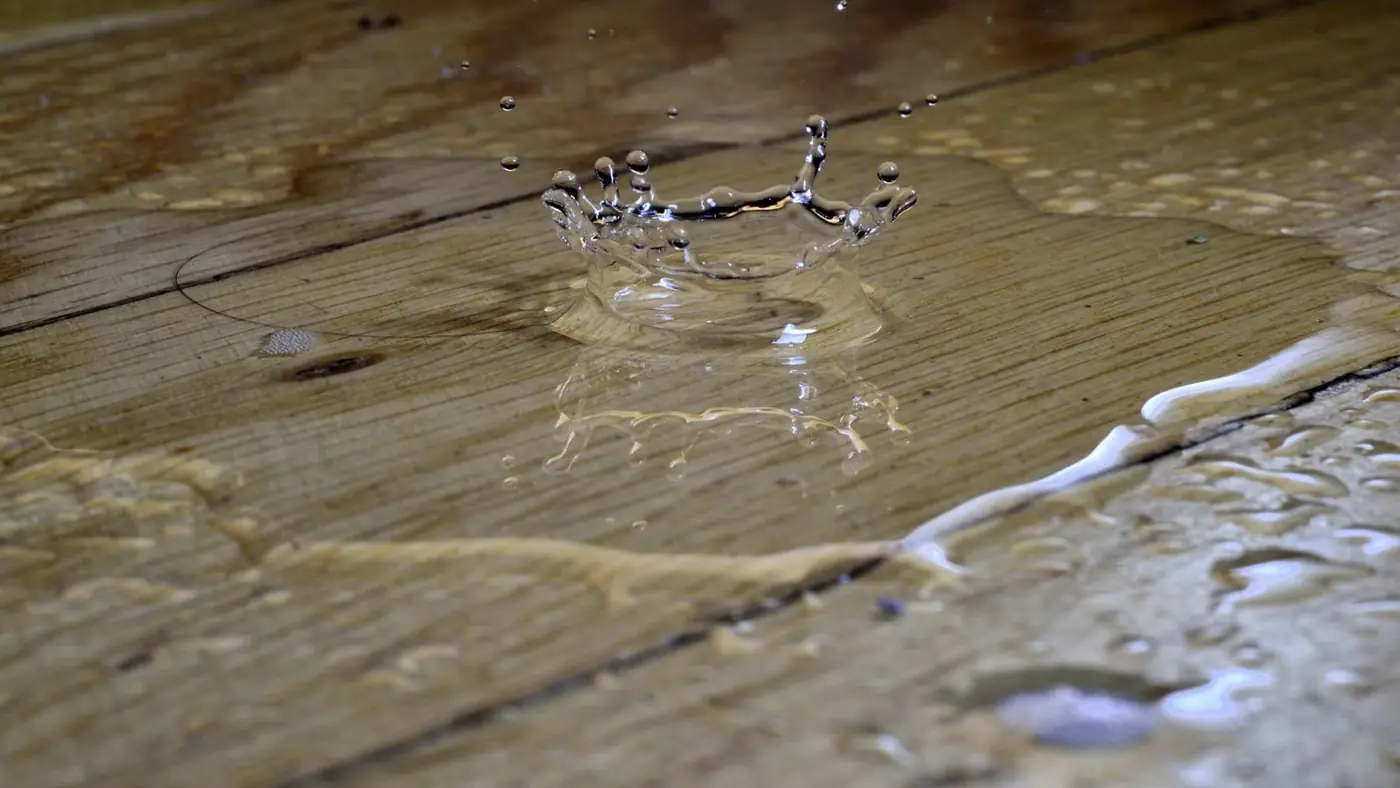
Can wet hardwood be saved
Often, yes, if the water was clean, the leak was caught within a few days, and drying starts quickly. Solid hardwood can swell, cup and recover when moisture leaves slowly and evenly. Engineered wood and floors that sat in water for a long time are less forgiving.
The one rule that saves the most floors is this: do not sand, seal or refinish until the wood and the subfloor have reached normal moisture readings. Sanding wet wood locks in trouble, and a fresh finish over trapped moisture will peel or cloud.
What to do in the first two days
- Stop the water source and extract any standing water.
- Lift rugs, mats and furniture so air and drying equipment can reach the boards.
- Photograph the floor from several angles, so you can show how it changed.
- Do not cover the floor with plastic, towels or wax, because covers hold moisture in.
- Do not walk on lifting boards in heels or boots, since wet wood dents easily.
- Call a crew to meter the floor before you try to heat or fan it dry.
Wet hardwood is fragile in a way dry wood is not. Boards that would shrug off foot traffic can chip, split or pop at the tongue when saturated. Light, careful use of the room is fine until the crew arrives.
Cupping versus crowning
Cupping means the edges of each board rise higher than the center, so the board looks like a shallow dish. It happens when the bottom of the board is wetter than the top, which is the usual result of a leak from below or a wet subfloor.
Crowning is the opposite. The center of the board rises above the edges. It can appear after cupped floors are sanded too early, or when the top surface got wetter than the underside. Both are signs of moisture imbalance, and neither one is a finish problem.
| What you see | Likely cause | Next step |
|---|---|---|
| Edges high, center low (cupping) | Moisture came from below | Find the source and dry the subfloor |
| Center high (crowning) | Surface got wetter, or sanded too soon | Let moisture equalize, then reassess |
| Boards lifting off the floor (buckling) | Heavy, long exposure to water | Crew inspection, partial replacement likely |
| Dark stains between boards | Water sat in seams | Check for mold growth and subfloor condition |
| White haze under the finish | Moisture trapped in the coating | Dry first, then judge the finish |
How a crew dries a hardwood floor
After extraction, a crew places moisture meters on boards and into the subfloor. Thermal imaging cameras help spot wet zones across the room, but they do not measure moisture. The meters do that, and the crew records readings so it knows when to stop.
Hardwood is dried with floor drying mats, panels or tented systems that pull water out through the face of the board while air movers and LGR dehumidifiers manage the room. Our water mitigation service runs these systems and takes readings daily. Drying hardwood usually takes longer than carpet, often a week or more, because wood releases water slowly.
Rushing the process with heat or a few strong fans can crack boards. Slow, even drying keeps the wood flatter.
Hardwood floors lifting after a leak?
Call 24/7 dispatch. A crew can meter the floor, start drying and tell you what is likely to survive.
Call (909) 505-3870Check the subfloor before you plan anything
The boards are only the top layer. Under them sits plywood or planks, and under that sits a crawl space or slab. If the subfloor stays damp, new boards will cup again within months.
Your crew should measure subfloor moisture from below when a crawl space is accessible, and through the boards when it is not. If a slab is under the floor, a moisture test on the concrete also matters. Soft spots, a musty smell, or fastener lines that show rust are warnings that the subfloor needs work before any finishing.
Refinish or replace
| Condition after drying | Usually refinish | Usually replace |
|---|---|---|
| Mild cupping that flattens as it dries | Yes, after readings are normal | No |
| Cupping that stays after full drying | Sometimes, if wear layer is thick enough | If boards stay warped |
| Buckled or split boards | Not the damaged section | Yes, affected boards |
| Black staining or deep rot | No | Yes, plus subfloor repair |
| Engineered floor with swollen layers | Rarely | Usually |
Solid wood has a thick wear layer and can often be sanded more than once. Engineered boards have a thin top veneer, so sanding a swollen board may cut through it. A repair contractor should check the thickness at a cut edge before promising anything.
Finishes, matching and what to ask about
- Ask whether the new boards will be stained to match the old, and by whom.
- Ask how long the finish needs to cure before furniture goes back.
- Ask whether the whole room will be refinished so the sheen looks even.
- Ask for the moisture readings before sanding begins.
- Ask whether the crew follows ANSI/IICRC S500 for drying.
Patching a few boards is common, but blending the new area into the old requires sanding the full run to a wall or a doorway. Our water damage repair team handles the rebuild after drying is confirmed. Confirm any contractor's license number and check it on the state board's site yourself before work starts.
Water Damage Notes for Loma Linda
Loma Linda was first marketed in the late 1880s as Mound City and renamed in the late 1890s, and the historic Mound City area still carries that name. If your home sits in an older part of town and you have original solid plank floors, ask the repair contractor to measure the board thickness. Thicker boards can usually take another sanding, while thin ones may not.
Bryn Mawr lies between Loma Linda and Redlands. Part of it joined the city at incorporation in 1970 and the rest was annexed in 2008. Do not assume your floor type from the neighborhood name or the year the street was added. A moisture reading and a cut sample tell you more than the address.
Nearby help
We also work in neighboring cities. If you are northwest of us near Barton Road, see our Grand Terrace water damage page. Homes west of us can also check the Colton service area.
Hardwood floor questions
How long should I wait before sanding a water-damaged floor?
Wait until the wood and subfloor read at normal levels, not for a set number of days. A crew with meters can tell you when. Floors often need a week or more.
Will cupped boards flatten on their own?
Mild cupping often relaxes as the floor dries evenly. Severe cupping or buckling often stays and needs repair.
Can I use a dehumidifier and fans at home?
They help with room humidity, but they do not replace controlled drying with mats and moisture checks. Without readings you will not know whether the subfloor dried.
Does insurance pay for hardwood floor repair?
Sudden and accidental water damage is often covered, while long-term leaks often are not. Check your policy and ask your insurer, and avoid permanent repairs until the adjuster has looked.
Do Loma Linda homes with older plank floors need anything special?
Ask for a thickness check at a cut edge or a floor vent opening before choosing refinishing. Older floors may have thicker boards, but that is not true of every home.