
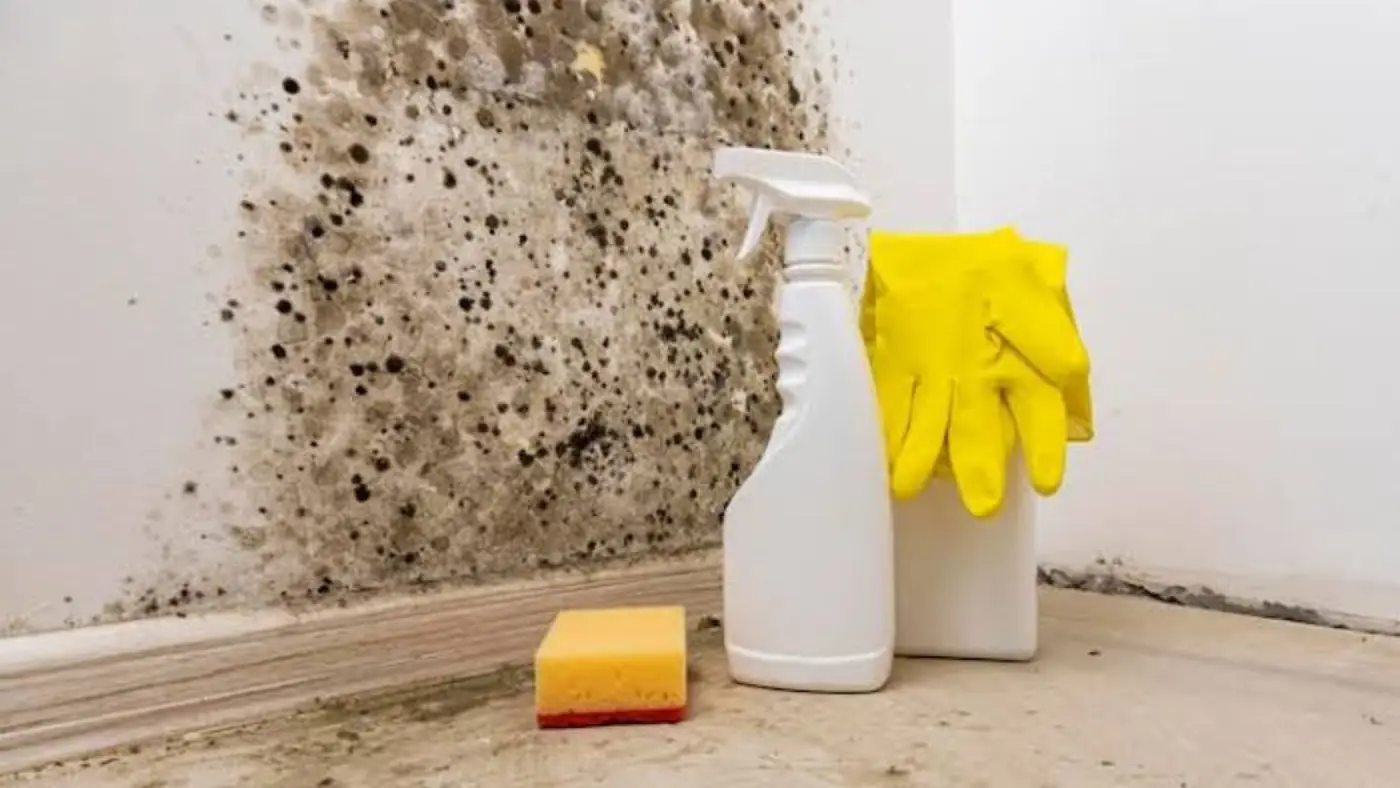
What to do when you find mold on a wall
Leave the spots alone, find the water, and get the moisture source fixed. Mold needs moisture to grow, so a wall that keeps getting wet will keep growing it no matter how hard you scrub. Once the leak, drip or condensation is stopped, the affected material can be cleaned or removed.
Do not paint over it, spray it with bleach and call it done, or sand it dry. Those moves hide the problem or spread spores around the room. A short inspection first tells you how far the growth goes.
Where wall mold tends to hide
- Behind a bed, sofa or dresser pushed flat against an exterior wall, where air cannot move.
- Closet corners and the back of shelves, especially on outside walls.
- Bathroom corners, around the tub surround and above the shower door.
- Under windows, where condensation or a failing seal lets moisture sit on the sill and sheetrock.
- Walls below a kitchen sink, a toilet supply line or a washer hookup after a slow drip.
- Ceiling to wall corners under a roof leak or an air conditioner condensate line.
Mold, mildew or dirt in plain words
Dirt wipes away and stays gone. Mildew is the common term for surface growth that looks flat, powdery or gray and white, often on bathroom paint. Mold is the broader word for fungal growth and can look fuzzy, speckled or spread in patches in many colors.
You cannot tell a type of mold by color, so please do not rely on the shade of a spot. If you want to know what species is present, that is a question for an independent tester. If you have health questions, those belong to a physician.
The moisture source comes first
Ask where the water comes from. A roof leak, a sweating pipe, a bathroom fan that vents into the attic or a wall that a sprinkler hits every morning all feed growth. Fix the source and then deal with the damage, in that order.
Drying wet materials within about 24 to 48 hours helps prevent growth, which is why a recent leak deserves a fast response even when nothing looks wrong yet. Old spots on a wall that is now dry are a different case from fresh growth on a wall that is still wet.
| What you see | Likely moisture source | First move |
|---|---|---|
| Spots behind furniture on an outside wall | Condensation with poor airflow | Pull furniture away, improve airflow, have a crew check moisture |
| Dark patch under a window | Window leak or condensation on the sill | Check the seal and flashing, dry the wall |
| Growth in a bathroom corner | Steam, a leaking surround or a loose caulk line | Run the fan, repair the leak, inspect behind the tile |
| Spots below a sink or washer | Slow plumbing leak | Shut off the line, call for a repair and a moisture check |
| Stain that returns after painting | An active leak behind the wall | Open the wall and find the leak |
Not sure how far it goes?
Dispatch is open 24/7. A crew can take moisture readings and tell you whether the growth stops at the surface.
Call (909) 505-3870Safe checks you can make today
- Press a dry gloved hand on the wall. Cool, damp or soft board means moisture is still present.
- Smell the room after it has been closed up. A musty odor with no visible spot can mean growth inside the cavity.
- Look at the other side of the wall, since a bathroom leak often shows up in the hallway or closet.
- Photograph the area with a ruler or coin for scale and check it again in a few days.
- Keep children, pets and anyone with health concerns out of the room until a professional has looked, and ask a physician about any health questions.
Why scrubbing and painting do not hold up
Drywall is porous. Growth on the paper face can reach into the board and the cavity behind it, so a wipe cleans only what you can see. Bleach on porous board mostly soaks into the surface and does little for the material underneath.
Painting over mold traps moisture and leaves the growth in place. Dry brushing or sanding lifts fine particles into the air. If the area is larger than a small patch, or the wall is wet to the touch, surface cleaning is not enough.
When the wall needs real remediation
Remediation follows ANSI/IICRC S520 practice. Ask any company whether its crews work to it. The steps below are typical, and the exact scope depends on what an inspection finds.
- Inspect the wall and measure moisture with a meter and thermal imaging camera.
- Set up containment barriers and negative air so the work stays inside the room.
- Remove porous materials that are affected, such as drywall, insulation and carpet edges.
- HEPA vacuum and clean the framing and non-porous surfaces.
- Dry the cavity completely before any rebuild begins.
- Repair the wall, using water damage repair crews for the drywall, taping and paint.
No honest company can promise that mold will never return. What it can do is remove the growth, dry the structure and help you find the moisture source. If the wall also took on water, mold remediation and a proper dry-out go together.
Water Damage Notes for Loma Linda
Loma Linda incorporated in 1970, and its name is Spanish for pretty hill. A city's age does not tell you how any one wall was built, so judge your wall by its moisture reading and not by assumptions about how old the house is.
The City of Loma Linda Water Production Division supplies water from groundwater wells in the Bunker Hill Basin. The main shutoff and the meter are the city side and home side of the same line, so know where both are. If a wall leak is feeding mold, closing that valve is the quickest way to stop the source.
Households in neighboring Colton and the Highland foothills call about the same wall problems, and the first steps are identical.
Wall Mold Questions in Loma Linda
Is the black spot on my wall mold?
It might be, but color alone cannot tell you. A moisture reading and an inspection show whether growth is present, and an independent tester can identify it.
Can I clean a small spot myself?
A very small, dry surface spot may be handled carefully, but find the moisture first. If it keeps returning or the wall feels damp, call a crew.
Should I paint over it to stop it spreading?
No. Paint hides growth and traps moisture. The wall needs to be dried and the affected material addressed first.
Does insurance cover wall mold?
Mold that results from a covered cause may be covered. Check your policy and ask your insurer, and keep photos and receipts.
How do I find where Loma Linda homes shut off water?
Find the main shutoff on the house side and the water meter on the city side, then practice turning the shutoff before you need it.