
How to tell if a wall is wet inside
Water behind a wall usually announces itself through small changes to the surface. Paint blisters, drywall feels soft near the floor, a baseboard swells or a corner smells damp even though nothing looks wet. Any one of these deserves a closer look, and two together almost always mean moisture is trapped in the cavity.
The only reliable way to know is to measure. A moisture meter and a thermal imaging camera can tell a crew where water sits and how far it has traveled, often without cutting anything open. The sooner that happens, the smaller the repair tends to be.
Signs you can check yourself
- Paint or wallpaper bubbling, peeling or showing a tan ring that grows after a shower or rain.
- A baseboard that has swollen, lifted from the wall or opened a gap at the seam.
- A musty odor near one wall that gets stronger when the room is closed up.
- A section of wall that feels cooler or warmer than the wall beside it, especially on a pipe run.
- Drywall that dents under light thumb pressure or sounds dull and soft when tapped.
- Hairline cracks, nail pops or screw heads showing through paint.
- Water bill that jumps with no change in how many people live in the home.
None of these proves a leak by itself. Paint can bubble from a humid bathroom and a baseboard can swell from a mopped floor. Look for a pattern that sits along a plumbing line, below a window or beneath a roof edge, and note whether it changes from day to day.
Where the water usually comes from
Pinhole leaks in supply lines, a loose fitting behind a sink, a washing machine box, a shower valve and a roof flashing failure all send water down the inside of a wall. Water follows gravity and framing, so the stain often appears far from the source. A wet wall in a hallway can trace back to a leak in the attic above it.
The category of water changes the plan. Clean supply water is treated differently from a washing machine overflow or a sewer backup. A crew will identify the source first, because drying a wall while the pipe is still dripping only wastes time.
How crews find hidden moisture
A pin or pinless moisture meter reads how wet drywall, wood and plaster are compared with a dry reference. A thermal imaging camera shows temperature differences, and wet material tends to look cooler because water evaporating from it takes heat away. Neither tool sees water directly, so a technician combines them with a close look at the room.
Readings are taken across the whole wall and the walls next to it, then logged so progress can be compared on later visits. Our mitigation crews work to ANSI/IICRC S500 practice, and you can ask any company whether its technicians do the same.
| What the tools show | Likely meaning | Typical next step |
|---|---|---|
| Wet drywall surface only, dry cavity | Surface splash or short exposure | Dry in place with air movers |
| Wet drywall and cool spot at a pipe run | Active or recent supply leak | Fix the pipe, then dry the cavity |
| Wet insulation behind intact paint | Water trapped in the cavity | Open small access holes, remove wet insulation |
| Wet bottom plates and baseboards | Water has wicked up from the floor | Remove baseboards, dry the plates |
| Soft, swollen or crumbling drywall | Long exposure | Cut out and replace the damaged section |
Seeing signs of a wet wall?
Call dispatch any time. A moisture scan tells you where to cut and where to leave alone, so walls that are fine stay intact.
Call (909) 505-3870When a wall has to be opened
Not every wet wall needs demolition. Drywall that is only damp and has not swollen can often be dried in place. Wet insulation is a different matter because it holds water against framing and rarely dries on its own, so it usually comes out.
Crews cut a clean, straight opening a little above the highest wet reading, so the patch is simple to finish. Drywall that has crumbled, shows mold-like growth or has been wet a long time comes out as well. If sewage or storm water was involved, the affected material is removed rather than dried.
Drying a wall cavity
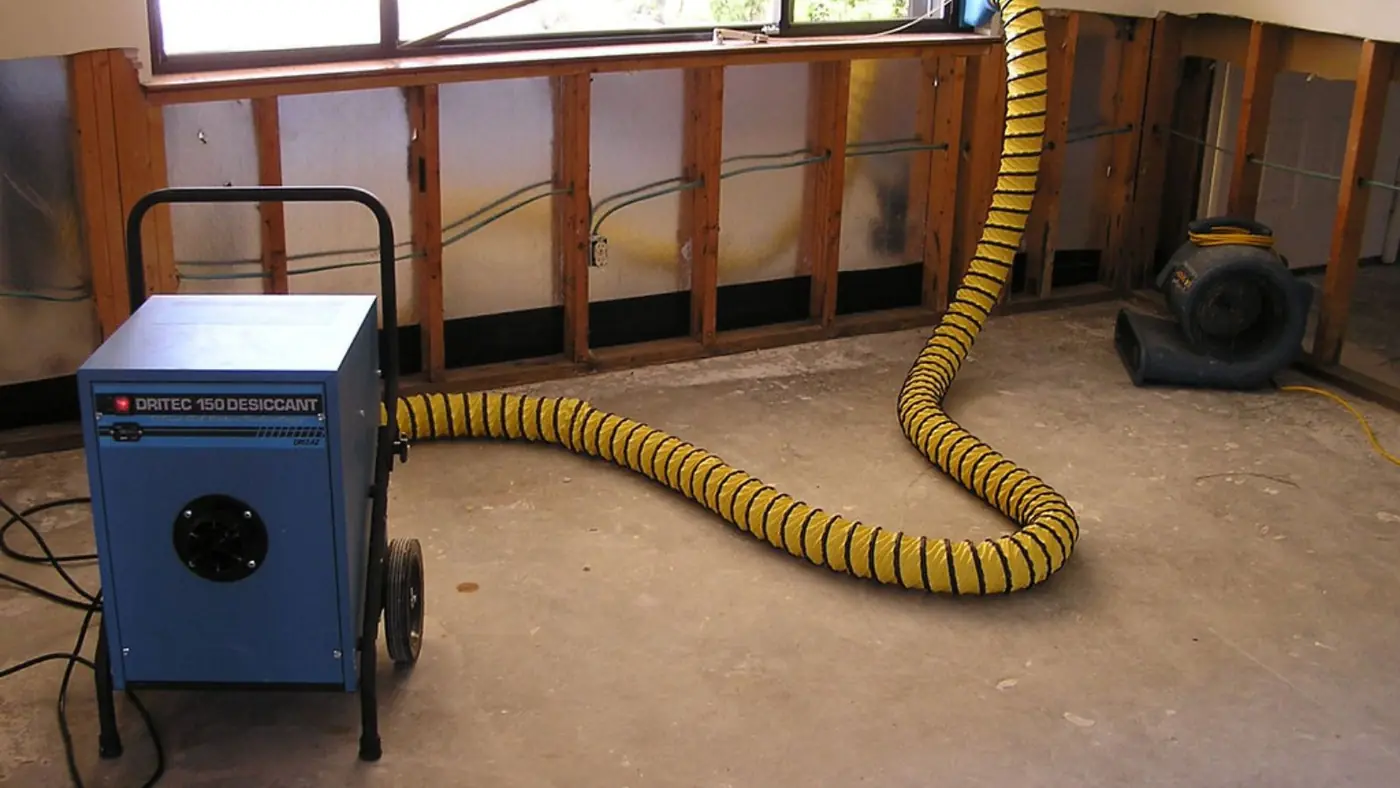
A closed cavity dries slowly because air cannot move through it. Crews drill small holes or remove the baseboard and push dry air in with air movers, or use injectidry panels that force air into the space. LGR dehumidifiers pull the moisture out of the room so it does not simply settle back into the wall.
Drying usually takes three to five days, longer for plaster, thick insulation or framing that stayed wet. The goal is a reading that matches an unaffected part of the same wall, not a surface that merely feels dry.
Water Damage Notes for Loma Linda
The city's Building and Safety division sits inside Community Development at 25541 Barton Road. Its phone is (909) 799-2836, permits are issued at the counter in the morning hours, an appointment is recommended and City Hall is closed on Fridays. Hours change, so confirm before you go.
The city page does not address permits for water damage repair specifically. If your repair means opening walls, rerouting a pipe or touching electrical, ask the city building department whether it needs a permit before the work is scheduled, and pass the answer to your contractor.
What the repair looks like afterward
Once the cavity reads dry, the rebuild is straightforward. New insulation goes in, drywall is cut to fit, seams are taped and mudded, and the patch is textured to match the wall. Primer seals the repair and paint goes on, usually across the whole wall so the color reads even.
This is the work covered by water damage repair. It happens after drying is confirmed, never before. Closing a wall over damp framing is how a small leak turns into a mold call later.
We scan and dry walls for customers across the area, including a similar drying plan in San Bernardino homes and Highland houses with the same step-by-step logging.
Wall damage questions
Can water damage behind a wall be dried without cutting it open?
Sometimes. If the drywall is damp but sound and the insulation is dry or can be reached through small holes, air can be forced through the cavity. Wet insulation, swollen drywall or contamination usually means cutting.
How long can a wall stay wet before mold starts?
Drying wet materials within about 24 to 48 hours helps prevent growth. Mold needs moisture, so the longer a cavity stays wet the more likely it is to become a mold problem. Fix the source and dry promptly.
Will a moisture meter find every leak?
It finds wet material, not the pipe itself. A technician pairs it with thermal imaging, a look at the plumbing and sometimes a pressure test by a plumber to locate the actual source.
Does a permit apply when walls are opened in Loma Linda?
That depends on the work. Patching drywall may not need one, while plumbing or electrical changes might. Ask the city building department before work begins and confirm current counter hours.
Why does the baseboard swell before I see any stain?
Baseboard and the bottom of the wall wick water up from the floor, and engineered or MDF trim swells fast. Swelling is an early signal that moisture is sitting at the base of the wall.