
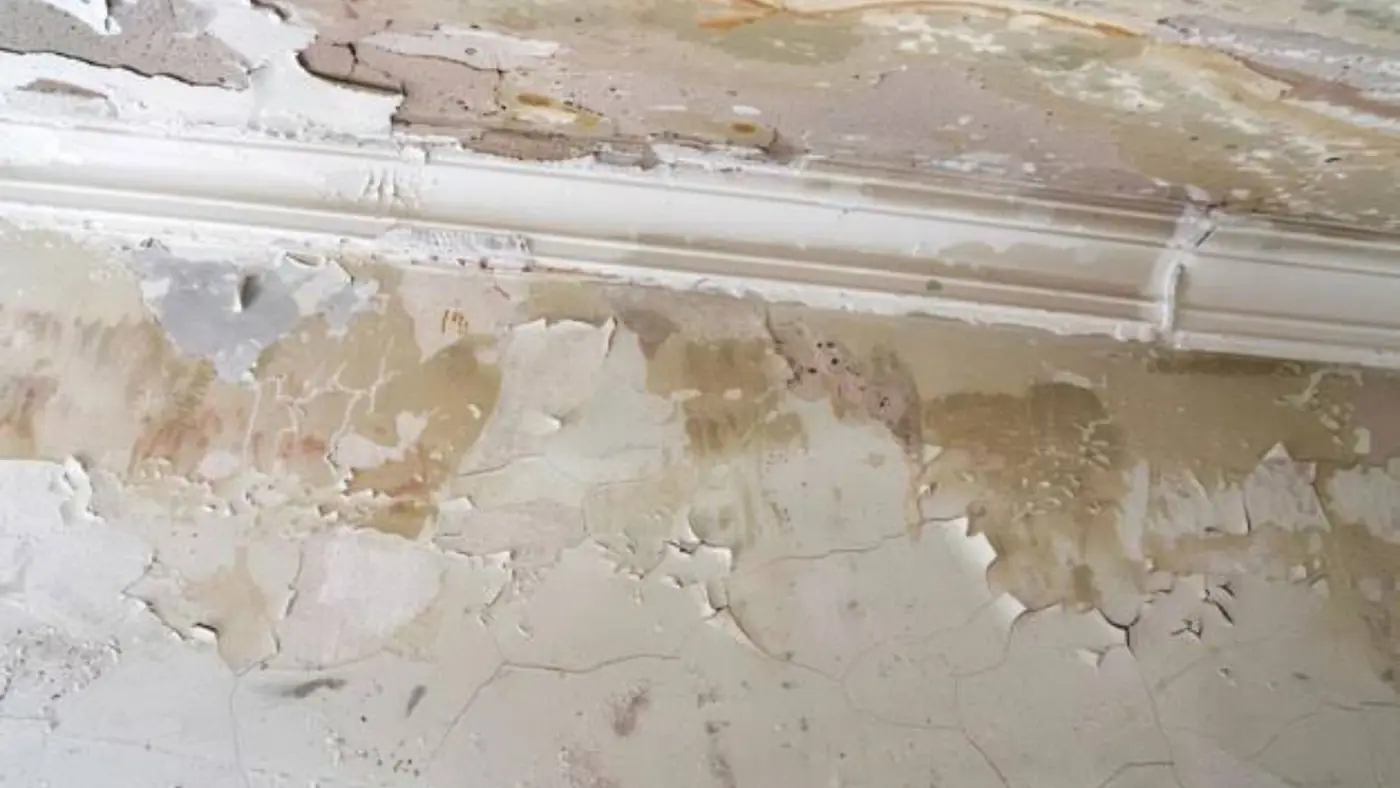
Cut it out or dry it in place?
Most walls with a light, clean-water stain can be dried in place if the drywall is still firm and the water was stopped quickly. Drywall that has gone soft, crumbles under a thumb press, bulges at the seams or was soaked by dirty water usually has to be cut out and replaced.
The color of the stain does not settle the question. A moisture meter reading, the water source and how long the wall stayed wet do. If you can see damage, a technician should check what you cannot see before you pick a repair.
What visible wall damage is telling you
Brown or yellow stains
A stain with a darker ring often means water reached the paper face and dried, then got wet again. A repeating ring points to a source that is still active, like a drip from a supply line.
Swelling or bubbling
Drywall holds water in its gypsum core. When the board swells, the core is saturated and has usually lost its strength.
Soft spots
If your finger sinks in or the board crumbles at the bottom edge, the gypsum is failing. This section is a candidate for removal.
Peeling paint and lifting baseboards
Paint blisters when moisture pushes outward from behind. Baseboards that cup or pull away often mean the bottom of the wall has been wet for some time.
Repair or replace: a decision table
| What you see | Water source | Usual decision |
|---|---|---|
| Light stain, board firm, no swelling | Clean supply water, caught fast | Dry in place with air movers and a dehumidifier |
| Swollen seams or bowed board | Clean water, wet for a day or more | Cut out the affected section and dry the cavity |
| Soft or crumbling at the baseboard | Any source | Remove the wet board and inspect the framing |
| Stain with a dark ring that returns | Ongoing leak behind the wall | Fix the leak first, then open the wall |
| Wall wet from a washing machine or sewage | Contaminated water | Remove and replace porous materials, clean the framing |
Baseboards, trim and cabinets on the wet wall
Baseboards are the first thing to show damage and the first thing crews pull. Solid wood trim can often be dried and reused, while MDF trim swells and rarely returns to shape. Removing the trim also lets air reach the bottom of the board, where water collects.
Cabinets and vanities on a wet wall need a look behind the toe kick. Water follows gravity and sits against the back panel, so a cabinet that looks fine from the front may have a wet back.
Insulation and the wall cavity
Wet insulation holds water against framing and the back of the drywall. Fiberglass batts that are only damp can sometimes be dried, but insulation that is saturated, matted or dirty is normally removed and replaced.
Drying a cavity means more than blowing air across the surface. Crews often drill small holes or remove the baseboard so air can move behind the board. Injectidry panels push dry air into the cavity, while LGR dehumidifiers pull moisture out of the room. Thermal imaging cameras help show where wet material continues past the stain.
Not sure if the wall can stay?
Dispatch is open 24/7. A crew can take moisture readings and tell you which sections need to come out.
Call (909) 505-3870How the rebuild goes
- Stop the source and confirm the plumbing or roof leak is fixed.
- Cut out wet drywall, usually a clean line about 12 inches above the highest wet reading.
- Remove wet insulation and dry the studs and plates until readings match a dry reference wall.
- Hang new drywall, tape and apply joint compound in thin coats.
- Sand, prime and paint, then reinstall baseboards and trim.
Drying usually takes three to five days, longer for plaster or thick insulation. Rebuilding on framing that still reads wet traps moisture, which is why a good water damage repair job starts with the drying log and not the drywall delivery.
Painting and finishing the repair
Primer matters more than people expect. A stain-blocking primer keeps old marks from bleeding through, and new joint compound needs its own primer so it does not flash under the finish coat. Painting a stained wall before it is dry only hides the problem for a few weeks.
For an even finish, paint the whole wall corner to corner rather than a patch. The first coat on new drywall soaks in differently than the old paint around it.
What to do before a crew comes
- Turn off the water source and move furniture away from the wall.
- Lift or remove electronics and rugs touching the baseboard.
- Do not paint, caulk or skim-coat over the stain.
- Photograph the damage and note when you first saw it.
- Run a fan if the area is clean and safe, but skip the vacuum on wet carpet near outlets.
If the wall was wet for more than a day or the water came from a dirty source, the scope grows from a patch into a full water damage cleanup. Our crews also work with owners in the Redlands area and across San Bernardino, so the same approach applies there.
Water Damage Notes for Loma Linda
The City Public Works lists water and sewer together and posts a Sewer Emergency Response Plan on its water and sewer page. If sewage is coming up in the street, that is a call to the city. If it is backing up inside your house and touching the walls, that is a job for a restoration crew and a plumber.
Sewage on drywall is a clear replace situation. Porous board that has soaked up contaminated water cannot be cleaned and dried safely, so expect that section to be removed rather than painted.
Wall Damage Questions in Loma Linda
Can drywall that got wet be saved?
Sometimes. Firm board that was soaked by clean water for a short time can often dry in place. Swollen, soft or contaminated drywall generally cannot.
How do I know the wall is dry enough to repaint?
Ask for moisture readings that match a dry wall in the same room. Surface dryness to the touch does not tell you what is inside the cavity.
Do I have to replace the whole wall?
Usually not. Crews cut a clean section, often along stud lines, and patch it. A full wall comes out only when the damage runs the entire length.
Who do I call if sewage backs up into a Loma Linda wall?
Call a restoration crew and a plumber for the inside of the house. The city handles a sewer main problem in the street.
Does a small stain need professional help?
A stain that returns, a ring that grows or a soft baseboard deserves a moisture check. The visible area is often smaller than the wet area.